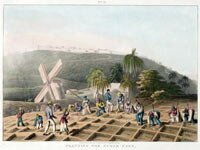
Slavery has been an evident and dark aspect
of our world’s society for centuries. Slavery during colonial
times led to the exploitation and the oppression of African
natives. Millions of people were kidnapped and enslaved,
societies throughout Africa were ravished and destroyed and new
societies were completely built and maintained on the labor and
lives of Africans. Slavery was implemented for the economic
enrichment of Europe and other countries that descended from
Europe.
More in-depth
information on slavery and education is available on a related
website: www.setallfree.co.uk
.
It was this very same exploitation that led to the mass
expansion of industry across Britain and the United States, as
well as other major areas throughout the world. Slavery created
the circumstances under which Africans and many African nations
were confined to the worst conditions ever experienced by the
human race.
Of course the memories of those who were enslaved are much
different from those of Europeans and their descendants. For
many, the legacies of slavery are simply a distant memory of a
period in history that bears no resemblance to their lives
today. Throughout Britain and America, many people are under
the belief that slavery was only a short term period that
lasted only a small time and its benefits were only seen by a
minute number of white people.
Series of Dreams: Bob Dylan (A
visual history from slavery to the election of Barack
Obama)
They believe that the evil legacies of slavery are overshadowed
by the role of the British abolitionists. For those of African
descent however, the memory bears a distinctive difference.
Slavery and exploitation affects everyday lives with memories
of suffering, brutalism, terror and death. Books and
publications from colonial time slaves give us insight into the
real legacies of slavery and all that the term encompasses.
While there were slave owners who took care of their slaves,
providing food and shelter among other privileges, there were a
multitude of slave owners who believed that cruelly beating
slaves was an acceptable practice. Many slaves from this period
were beaten to death by slave owners for their acts of
defiance, such as standing up for themselves and their families
and instigating escapes. The dark period that we know as the
American slavery period is forever haunted by memories from
these publications. Stories of women being ravished and raped
for the enjoyment of their owners and bearing Mulatto children
who were forever condemned by both the American and African
races are told throughout history.
Children growing up not knowing that freedom existed for
Africans were also widespread throughout this period. Pain,
fear and an overall feeling of uselessness was rampant
throughout slave quarters. Some slaves during this time simply
had no idea that a free life existed. It was not until
America’s Civil War that some slaves realized that they had a
human right to their own freedom.
The legacies of slavery may very well point to a thriving
society and of societies that have evolved over time into the
world that we know today. These legacies however, also point to
a gross negligence and abuse of a people whose only sin in life
is that they just happened to be born in a country that was not
as rich and developed as those that they were eventually sold
into.
There are many people throughout the world who believe that
racism was born of slavery. This is another legacy of slavery.
Because of the initial African enslavement, many people feel
that today’s racial inequalities exist. These different
interpretations of slavery and its legacies throughout the
world have resulted in many groups who celebrate Christopher
Columbus for discovering America, while other groups condemn
him for discovering a land that has caused much grief and
turmoil for a select race of people.